
The Lindsay Clancy Trial: The Documentation Lesson Isn’t “Write More Detail”
What happens when, years later, someone else has to understand the clinical decisions you made today
If you spend any time in therapist groups online right now, you already know the Lindsay Clancy trial has people talking. And arguing a lot.
Some therapists are horrified by the scrutiny of the clinicians involved. Some are criticizing the care. Some are criticizing the documentation. Others are pointing out the very real problem of hindsight bias. It is easy to identify warning signs once you know the outcome.
At the center of all of this is an unfathomable tragedy: three young children, Cora, Dawson and Callan, lost their lives.
Underneath those arguments, I can almost feel the pendulum starting to swing. Therapists who have spent years hearing “don’t put too much in the record” are looking at their own notes and wondering whether they now need to document every detail.
Could an attorney pull up one of your notes years from now, put it on a screen in a courtroom, and ask you to explain why you did, or didn’t do, something? Unfortunately, yes. But turning a 53-minute psychotherapy session into a six-page novella won’t solve the problem.
Therapists have good reason to be confused about what belongs in a note. Depending on who trained you, you’ve probably heard some combination of:
- “Your notes need to demonstrate medical necessity.”
- “Don’t put too much in the chart.”
- “Document risk thoroughly.”
- “Protect the client’s privacy.”
- “Assume your notes will be subpoenaed.”
- “Write enough for another clinician to understand the case.”
- “Don’t write anything you wouldn’t want read aloud in court.”
- “If it isn’t documented, it didn’t happen.”
No wonder therapists are confused. Clinicians are drowning in conflicting advice about documentation.
The Clancy trial gives us a reason to sort through that advice and get much clearer about what belongs in the clinical record. We can do that without responding to our anxiety by documenting more detail. Clinical judgment may someday have to stand on what we wrote.
Clinical Decisions Look Different in Hindsight
Mental health care carries risk because we work with people. People are complicated and sometimes unpredictable. Symptoms change. Circumstances change. Clients don’t always disclose everything. A client may present one way with a therapist and differently with a psychiatrist, PCP, spouse or emergency department.
We assess risk, make plans, consult, coordinate care and use our clinical judgment. None of that gives us the ability to know with certainty what another person will do next.
In January 2023, Lindsay Clancy’s three young children, Cora, Dawson and Callan, were killed. Her defense does not dispute that Clancy killed them. The question before the court is whether she is criminally responsible because of her mental state. Her psychiatric treatment in the months before the killings has become a significant part of the testimony.
What a client reports in retrospect may differ from what they reported or appeared to experience during treatment. The clinical record documents the information available to the clinician during treatment and the clinical decisions made based on that information.
Her clinicians’ decisions are now being examined with the benefit of information that emerged later. Most importantly, everyone now knows the outcome. Hindsight may or may not be 20/20.
Later information can change how earlier behavior, symptoms and reports are interpreted. Questions about possible psychosis may also take on different significance in retrospect. A decision to continue outpatient treatment can look very different after a catastrophic outcome than it did when the clinician was sitting with a client who denied intent to harm herself or anyone else.
We can ask hard questions about the care while recognizing the danger of judging clinical decisions as though the clinicians knew the ending. There is plenty here for therapists to disagree about, but there is also a lot we can learn from this case.
I’m not going to try the case here or decide whether an individual clinician’s judgment was sound. I’m using pieces of the testimony to look at what therapists can learn about clinical reasoning, care coordination and the record we leave behind.
Years later, when memories have faded and everyone knows how the story ended, the clinical record may be the strongest evidence of what the clinician knew, assessed and considered at the time.
When Clinical Shorthand Isn’t Enough
Imagine this in a progress note:
“Passive SI. Denies plan/intent. Safety plan reviewed.”
You may know exactly what those words mean because you were there. Perhaps you assessed the nature of the suicidal ideation, intent, access to means, history, protective factors, current stressors, supports and the client’s ability to engage in a safety plan. You considered the client’s presentation and whether outpatient treatment remained appropriate.
Then you summarized all of that in a few words that made perfect sense to you.
Years later, you may remember very little of the assessment behind those words. An attorney reading your note can’t read your mind.
Then come the questions that can feel like a personal attack. Some may even be asked in a way designed to rattle you. But the record has left unanswered questions, and now you are being asked to supply the answers years later:
- What did “passive” mean?
- What did you assess?
- Was there access to means?
- What protective factors did you identify?
- Why did you believe outpatient treatment remained appropriate?
- What did “safety plan reviewed” include?
The therapist may have done thoughtful clinical work, while the record preserved the conclusion without enough of the reasoning that led to it.
This is also why “If it isn’t documented, it didn’t happen” can be terrible advice when nobody explains what it means. Therapists hear that phrase and understandably conclude that they should document every detail.
Risk assessment involves a lot of clinical thinking. The record needs to show enough of that thinking to support the decision you made. It doesn’t need every word spoken in the session.
One psychiatrist who treated Clancy testified that Clancy did not report hearing voices or thoughts of harming her children. That was the information available to the psychiatrist from Clancy during those appointments.
Consider two ways the same clinical work from the same session could appear in the record.
One note says:
“Denies SI/HI/AVH.”
Another note documents the relevant assessment of thought content, perceptual disturbances, suicidal thinking, thoughts of harming others or the children, significant sleep disturbance and other concerning symptoms. It includes the client’s responses, relevant clinical observations and enough of the clinician’s formulation to explain why the current level of care remained appropriate.
Though the clinical work behind those notes could have been equally thoughtful, the records do not demonstrate that equally well.
.Years later, when memories have faded and everyone knows how the story ended, the record may be our best evidence of what the clinician knew, assessed and considered at the time.
Tell the Clinical Story, Not the Client’s Story
Therapy is full of stories. Clients tell us about relationships, conflicts, trauma, family history, conversations and events that may be deeply important to their treatment. The progress note does not need to become a repository for every detail the client shares.
The progress note should tell the clinical story.
The clinical story connects diagnosis to symptoms, symptoms to functional challenges, functional challenges to interventions, and interventions to the client’s response and progress. That is the Golden Thread.
I often teach the Golden Thread in the context of audits because auditors need to be able to follow the clinical logic. Insurance requirements are an important part of documentation, and weak or inconsistent records can lead to clawbacks. But if we think of documentation as something we only do to get paid and survive an audit, we’re overlooking its clinical significance.
The same structure that demonstrates medical necessity also creates a record of our clinical reasoning for continuity of care, a board complaint or a legal proceeding.
Consider the issues being raised in the Clancy trial. If a client is experiencing severe insomnia, racing, intrusive or suicidal thoughts, the clinically useful record doesn’t require pages describing everything happening at home.
It needs to capture the symptoms and changes that matter, what the clinician assessed, and relevant risk and protective factors. It should also show how information from other sources informed the assessment, what action was taken and the reasoning behind the decision.
That’s the clinical story. It preserves what matters without unnecessarily exposing the client’s private story.
There is also a limit to what documentation can do. Documentation cannot guarantee a good clinical outcome or eliminate the uncertainty involved in clinical decision-making. It can preserve the assessment, information and reasoning behind a decision so that someone reviewing the record years later doesn’t have to guess how you got there.
When Providers Have Different Pieces of the Picture
Another striking issue emerging from the testimony is that clinically relevant information was not always shared across providers. The testimony provides several examples:
- One clinician testified that she had a two-page discharge summary from Clancy’s inpatient stay but did not obtain the full inpatient record or records from an earlier emergency-department visit.
- Another clinician testified about Clancy’s depression, severe sleep problems, racing and intrusive thoughts, and suicidal thoughts. She also testified that she had not communicated with some of Clancy’s other treating providers or obtained some of their records.
- A therapist testified that she had not reviewed another treating provider’s notes. Those records included clinically significant information such as insomnia, racing thoughts and suicidal ideation, and the other provider had considered bipolar disorder as a possible diagnosis.
Those facts do not tell us, by themselves, whether any clinician had enough information to make a sound clinical decision. They do show how different providers can each hold clinically important information that may never be brought together.
Therapists know why coordination can be difficult. You leave a voicemail. The prescriber returns the call while you’re with another client. You call again. Your client is scheduled tomorrow, and you still haven’t connected.
Those barriers are real. So is the clinical importance of trying to connect. The effort needs to be documented.
Document the Consultation, Even When Nobody Calls Back
A conversation with another provider doesn’t require a transcript. The collateral or consultation note should capture the clinically meaningful information: who you communicated with and their role, why you consulted them, important information shared and received, how the information impacted your assessment or treatment plan, and what each person agreed to do next.
For example:
“Consulted with psychiatric prescriber about client’s increased insomnia, racing thoughts and recent changes in symptoms. Prescriber reported a recent medication change. Discussed concerns about the client’s change in mood and agreed that symptoms should be monitored more closely. Prescriber will review medications with client tomorrow. Therapist will reassess symptoms and safety at next contact. Therapist and prescriber agreed to advise client to seek urgent help if symptoms worsen or safety concerns increase.“
That record shows that the therapist recognized a concern, gathered information from another treating professional and incorporated that information into the plan. Each piece of information can impact the clinical formulation.
Sometimes, of course, the consultation never happens. If another provider has information you need, or needs information you have, and the situation warrants communication, document your attempts even when nobody calls back.
For example:
“Contacted psychiatric provider on 8/12 regarding increased insomnia and recent change in client’s presentation. Requested consultation regarding medication and current treatment. Voicemail left with callback information. No response as of 8/14. Second outreach made that day.”
Without that note, a later reviewer may see concerning symptoms in the record and reasonably wonder whether the therapist tried to communicate with the prescriber. The collateral note answers that question. It shows that the therapist recognized the concern, attempted coordination and followed up when there was no response.
What to Document When Risk Emerges
A giant suicide-risk template pasted into every progress note is not evidence of thoughtful assessment. When meaningful risk emerges, though, the documentation needs enough substance to show how you assessed it and what you made of the findings.
Depending on the circumstances, that may include what prompted the assessment; the nature, frequency, intensity and duration of the thoughts; plan and intent; whether the client had taken steps to prepare for suicide; access to means when relevant; risk and protective factors; changes from baseline; and relevant observations about the client’s presentation.
Depending on your assessment, you may have:
- Developed or reviewed a safety plan
- Consulted another provider
- Contacted a collateral
- Increased the frequency of sessions
- Referred the client for an urgent evaluation
- Taken appropriate emergency action
- Continued outpatient care
Whatever you decided, the record should show how the assessment led to that decision.
For example:
“Client reports intermittent passive thoughts of death without plan or intent and denies taking any steps to prepare for suicide. Denies access to identified means. Remains future-oriented and engaged in treatment; identifies spouse and sister as supports and agrees to use crisis resources if symptoms escalate. No evidence of psychosis. No intoxication reported or observed. Based on current presentation and assessment, clinician does not identify indications for emergency evaluation at this time. Will increase contact to twice weekly and reassess.”
That is considerably more useful than “Denies plan/intent.” It is also considerably shorter than a novella.
So, Do We Need to Document More?
Before we pull lessons from this case, I don’t want the documentation discussion to obscure the magnitude of what happened. Three children, Cora, Dawson and Callan, lost their lives. Their father and extended family have experienced an unfathomable loss. Lindsay Clancy killed her children, something her defense does not dispute, while the trial is determining whether she was criminally responsible for those acts.
There are human beings on every side of what we are examining. The clinicians involved are now having decisions they made years ago scrutinized in open court. Their professional judgment, reputations and careers may be affected by what follows. That scrutiny does not diminish the tragedy of the children’s deaths, and compassion for the clinicians does not require us to avoid legitimate questions about the care.
I understand why therapists are upset about this case. There are legitimate questions about the care Clancy received. There are also legitimate concerns about hindsight bias and what happens when clinical decisions are examined years later, after everyone knows the outcome.
Somewhere in all of that, therapists started arguing about what other therapists should think about the case. Some are angry at those criticizing the care. Others are angry at those defending it. Some have directed their anger toward the legal process and the attorneys questioning the clinicians.
Watching a clinician’s words and decisions picked apart in a courtroom can be brutal. Questions may be pointed, repetitive or designed to challenge the clinician’s credibility. The attorneys are also doing their jobs. They are testing the evidence, looking for inconsistencies and trying to establish what happened.
We don’t have to like watching that process to understand why it exists. We can ask hard questions about the care, recognize how difficult it is to have clinical decisions scrutinized years later, and still have compassion for the people involved.
We can also take a harder look at some of the documentation advice therapists have been given. Many therapists learned documentation from another therapist who learned it from another therapist who once heard at a training in 2009 that you should “keep your notes vague in case you get subpoenaed.”
The therapists who received poor documentation training weren’t foolish for following it. They were often trying to protect their clients and themselves without being taught that protecting a client’s privacy does not require vague documentation.
So, do we need to document more?
Sometimes. The goal is enough clinical content for someone else to understand what you assessed, how you understood it and why you made the decision you made.
Your client’s private story deserves restraint. Your clinical work deserves a record that shows the thinking behind it.
Resources
Associated Press: Mom and sister testify about Lindsay Clancy’s declining mental state before she killed her children
This supports the family testimony, the defense position, and the fact that the defense does not dispute that Clancy killed the children.
CT Insider: Lindsay Clancy’s therapist had ‘no concerns.’ But she didn’t read another provider’s notes.
This supports the testimony about one therapist not reviewing another provider’s notes and the clinically significant information documented there.
SAMHSA: SAFE-T: Suicide Assessment Five-Step Evaluation and Triage
This supports the risk-documentation discussion, including risk factors, protective factors, suicide inquiry, intervention, rationale, and follow-up.
Associated Press: Police describe a father’s horror as he realizes then-wife Lindsay Clancy killed their 3 kids
This supports the basic case facts, the deaths of Cora, Dawson, and Callan, and the competing arguments about Clancy’s mental state and criminal responsibility.
Could your documentation tell the clinical story if you had to defend it years from now?
My free Audit Checklist gives you 18 concrete things to check in every note, from start and stop times to risk assessment and medical necessity. Because protecting your clients starts with protecting your paperwork.
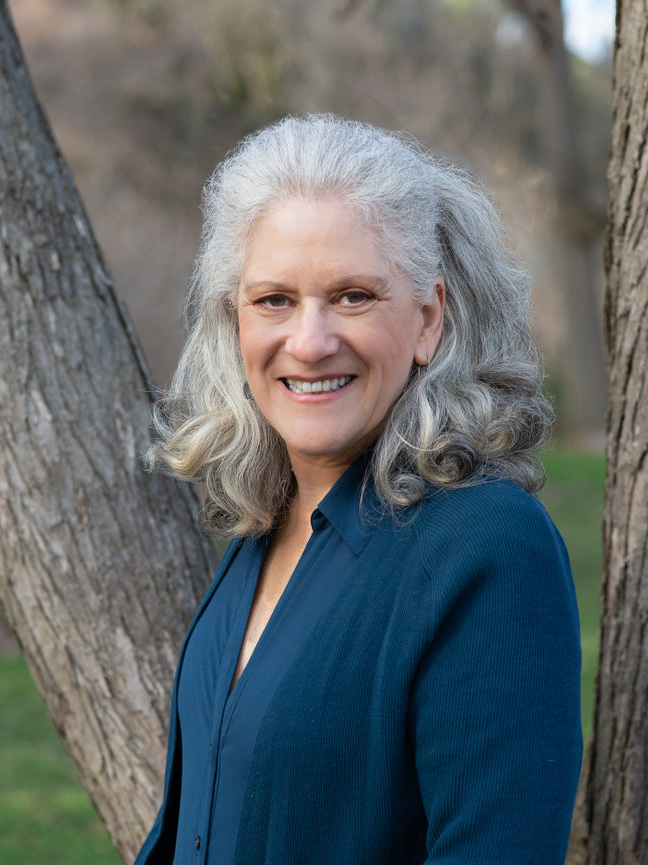
Beth Rontal, LICSW, a private practice therapist and the Documentation Wizard® is a nationally recognized consultant on mental health documentation. Her Misery and Mastery® trainings and accompanying Essential Clinical Forms help therapists create clear, clinically meaningful documentation that captures the thinking behind their clinical decisions without unnecessary detail. Beth’s Documentation Wizard training program helps clinicians turn their clinical skill and intuition into a systematic review of treatment that helps to pass audits, protect income, maintain professional standards of care, reduce documentation anxiety and increase self-confidence. Beth’s forms have been approved by 2 attorneys, a bioethicist, and a billing expert and have been used all over the world. She mastered her teaching skills with thousands of hours supervising and training both seasoned professionals and interns when supervising at an agency for 11 years. Her newest initiative, Membership Circle, is designed to empower psychotherapists to master documentation with expert guidance, efficient strategies, and a supportive community.